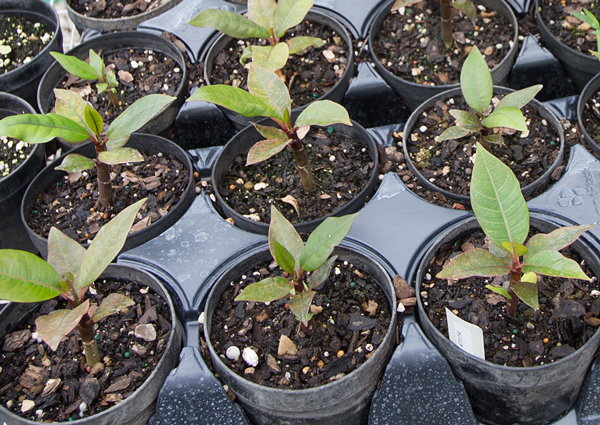
A new plumeria brings a little uncertainty along with the excitement. Its label may tell you a name, but it may not tell you how recently it was rooted, where it was growing, or what happened during the trip home.
The first useful task is to learn what arrived. A short arrival record and a separate place to observe the plant can make later care decisions much clearer.
Start with the plant you have
Is it an unrooted cutting, a recently rooted plant, a seedling, a graft, or an established potted plant? Those starting points matter. A cutting without working roots cannot be managed as though it were an established tree.
Ask the source about recent growing conditions, rooting or repotting, watering, and any treatments. Record what you were told separately from what you can confirm. If the rooting date is unknown, write “unknown” and leave room to update the record.
Take a whole-plant photograph before changing the setup. Add a picture of the label and any area you want to watch. These become a useful baseline if a leaf drops, a mark expands, or a question about the plant's name comes up later.
Give observation its own space
Keep a new arrival separate from the established collection while you inspect and monitor it. The observation area still needs conditions appropriate for that plant: protection from damaging temperatures, suitable light, and drainage. Isolation in an unsuitable corner can create another problem.
Examine leaf surfaces and undersides, tips, branch joints, the soil line, and accessible pot edges and drainage holes. A magnifier can help with small insects and webbing. Record what you actually see rather than assigning a diagnosis from one mark.
For a detailed process, use How to Quarantine New Plumeria Additions on PlumeriaCareGuide.com. Separation and repeated inspection reduce risk; a clean first look or a date on the calendar does not certify a plant as pest-free.
Make each change for a reason
Arrival does not automatically call for fertilizer, pruning, a pesticide, or repotting. First check the plant's condition and what its roots and current environment can support. Investigate a specific concern when evidence warrants it; avoid dismantling a healthy root ball simply to complete an arrival routine.
Write down any necessary action and its date. If you move the plant, change watering, and apply several products at once, it becomes harder to tell which change helped or contributed to a problem.
Find My Phase on PlumeriaWay can help you choose a learning route appropriate to the plant's present readiness.
Carry the arrival record forward
A useful first entry can be short: the date received, source, label wording, plant type, observed condition, current location, and the next thing to check. Keep the original photographs with that entry. When you inspect again, add a dated observation instead of replacing the first one.
If something remains unclear, bring that record to Ask Plu.Me. A question supported by arrival photographs, recent conditions, and a clear account of changes gives the conversation a better starting point.