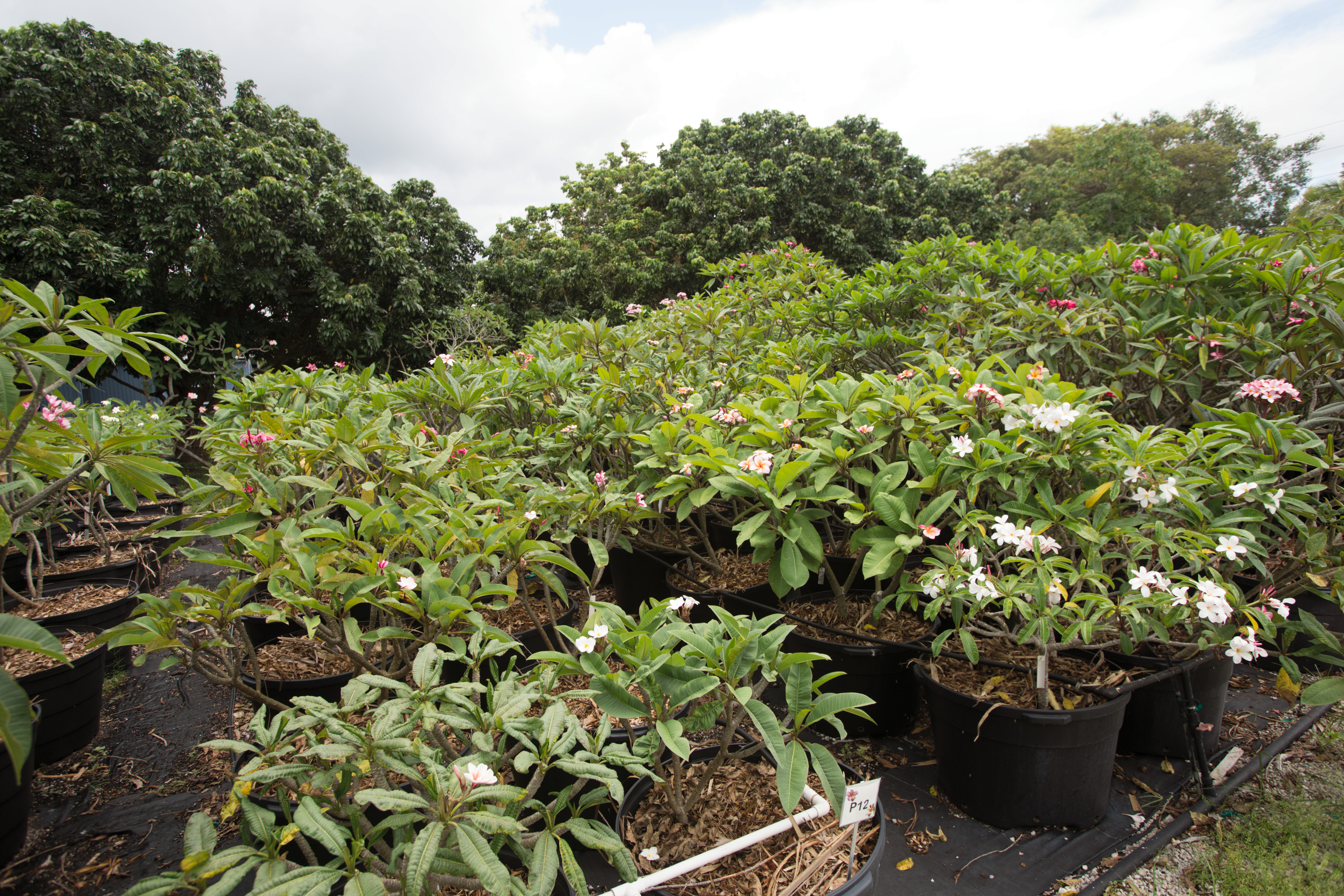
Two plumerias can share a yard and experience quite different days. One may receive rain directly while the other sits beneath an overhang. A wall may shelter one container from wind, while paving adds heat around another.
Those differences are worth recording before deciding that both plants need the same routine. A simple walk through the growing space can reveal details that a regional forecast cannot describe.
Give each growing area a name
Start with useful, ordinary names: east fence, covered porch, open bench, winter sunroom. The purpose is to identify a place you can revisit and describe consistently.
Group plants that share similar conditions, but keep meaningful differences visible. A row that extends beyond a roof edge may contain both rain-sheltered and rain-exposed pots. One name for the entire row could hide that distinction.
The Find Your Plumeria Microclimate tool on PlumeriaCareGuide.com provides a structured way to describe a growing area. Regional information is a starting point; your observations supply the details around the actual plant.
Visit at different times
Look in the morning and again later in the day. Notice when direct sun reaches the leaves, when shade arrives, and whether nearby walls or paving change the exposure. A single visit can miss a strong afternoon sun period.
After rain, check which containers actually received water. After a windy day, note which places were exposed and which were sheltered. If you use a thermometer, record its location and whether the reading was taken in sun or shade. Comparing measurements is more useful when their conditions are known.
Keep observation and interpretation separate. “Pot remained sheltered during the rain” is an observation. “This plant needs water now” is a decision that still requires checking the root zone and the plant.
Add the container to the picture
Location is only part of the story. Record the container size, drainage, growing medium when known, and whether roots extend into the ground. Two adjacent pots can still behave differently.
Follow how moisture changes below the surface rather than judging only by the top of the mix. For help connecting these observations to a watering decision, continue with the Plumeria Watering and Moisture Guide.
An example notebook entry might read: “Covered porch: morning sun; rain did not reach this pot; medium still moist below the surface.” This is a record of conditions, not a prescription to water or withhold water for a fixed number of days.
Revisit the record when the setting changes
Update the notes when plants move, surrounding branches are pruned, shade cloth changes, or seasonal light shifts. A summer growing area and a winter storage area may deserve separate entries.
Make one clear, justified adjustment at a time when practical, then record what changes. The goal is to learn how this place behaves and how this plant responds, rather than to collect measurements without using them.
When the observations are clear but the next care decision is not, Find My Phase on PlumeriaWay helps connect that information with the plant's readiness.