
The Plumeria Way
The first warning may be a pot that stays heavy. By the time a leaf droops, the roots may already be struggling.
After several rainy days, the leaves on your plumeria begin to hang. The surface of the pot looks dry enough to water. But when you lift it, it feels almost as heavy as it did after the rain. How can a plant look thirsty with that much water around its roots?
A drooping leaf tells you it has lost firmness. That can happen in dry soil, when roots have too little water to draw from. It can also happen in saturated soil, when roots have too little oxygen to keep supplying the leaves. A look deeper in the pot helps you decide which problem you have.
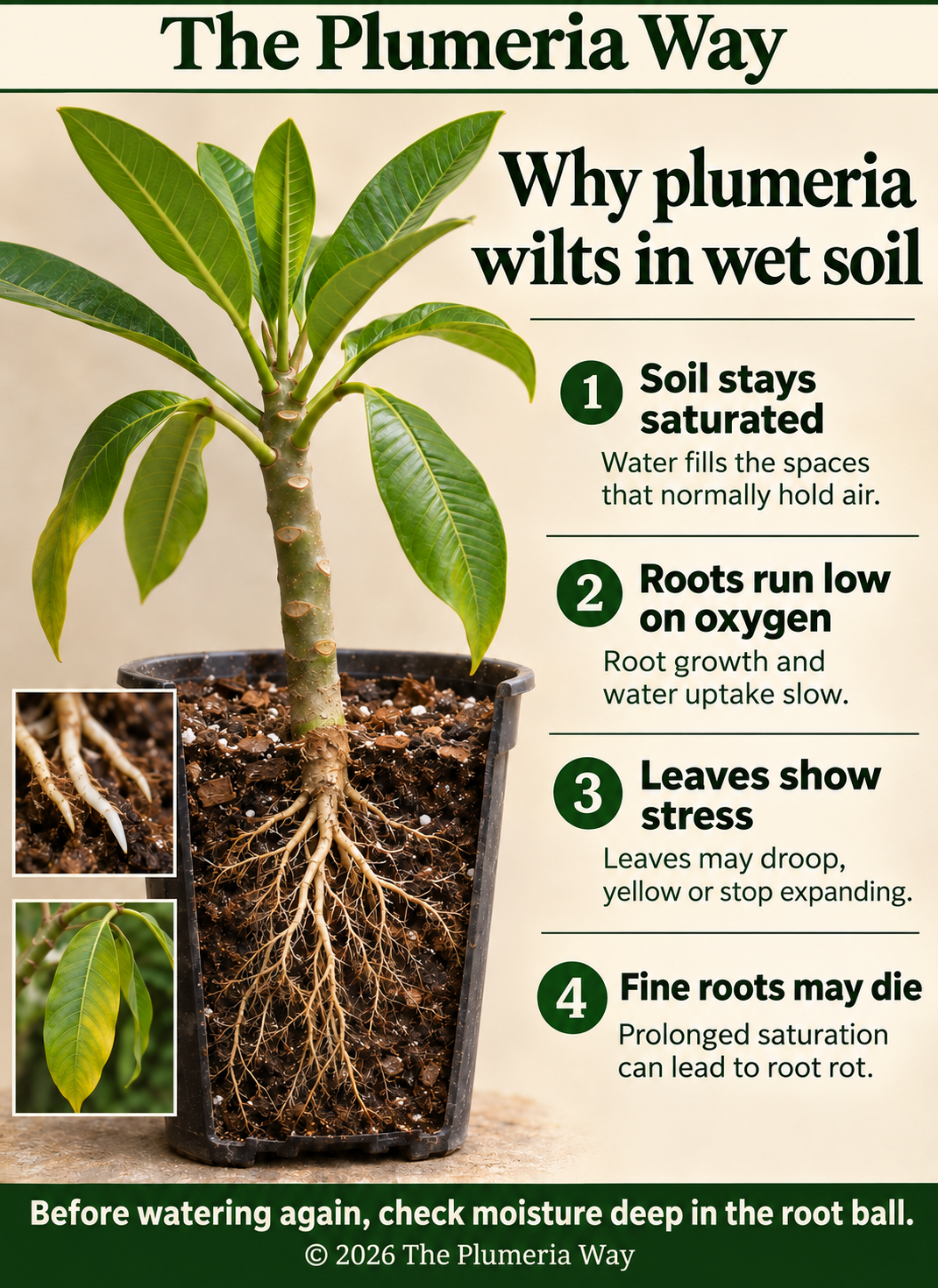
1. Water lingers where the roots grow
After a good soaking, excess water normally drains from the larger spaces in the potting mix. Air moves back in while the smaller spaces still hold moisture. Trouble starts when those larger spaces stay full of water. Repeated showers, a pot sitting in runoff, or an irrigation timer that keeps running through a wet week can extend that period. In the ground, compacted soil beneath a planting hole can hold water after the surface puddle disappears.
2. Root function slows before leaves change
Roots use oxygen to release energy from sugars. In saturated soil, fresh oxygen reaches them slowly. As the supply falls, root tips grow more slowly, nutrient uptake declines, and the roots become less able to deliver water to the canopy. At this point the leaves can still look healthy. If drainage restores air soon enough, the episode may pass with little visible injury.
3. A sudden soaking and a wet week can look different
After sudden waterlogging, an actively growing plumeria may wilt while its leaves are still green. On a bright afternoon, those broad leaves can lose water faster than the impaired roots can replace it. With repeated wet spells, the change may be easier to see at a branch tip. A young leaf that had been steadily unfolding stalls, or the next leaves open smaller than usual. Older leaves may yellow and drop.
Leaf symptoms overlap. Yellowing can appear before obvious wilt, and a deciduous plumeria naturally sheds leaves as it enters dormancy. What makes root stress more likely is a change from the plant’s usual growth together with soil that stays wet at root depth.
4. Prolonged saturation can cost the plant roots
Fine roots begin to die if oxygen stays low. Wet conditions can also favor organisms that cause root rot. Once the plant has lost absorbing roots and shed leaves, it may use water more slowly. That helps explain why the same watering interval that suited a leafy plant in summer can keep an injured one wet for too long.
Draining the pot lets air back in. Replacing lost roots takes longer, so wilt can persist even after drainage improves. With extensive root loss, branch tips may die back. During active growth, a young leaf that resumes expanding is more encouraging than waiting for an older yellow leaf to turn green again.
What to do with the plant in front of you
If the lower mix is wet and the stem base is firm, empty any standing runoff, check that the drainage holes are open, and let the pot drain. A stable plant can usually stay in its pot. Before watering again, check below the surface. A plain wooden skewer inserted near the pot wall can help you sample the lower mix. Read it alongside the weight of the pot.
If the plant keeps wilting in wet mix, or the stem base develops a soft area, inspect the roots and base. Firm roots and roots that feel soft or come apart tell different stories. Finding decaying tissue changes the recovery decision. Choose an overwatering recovery action.
If the pot is light and the root ball is dry at depth, an established, actively growing plumeria may genuinely need water. Water the root ball thoroughly and let the excess drain.
A cutting follows a different sequence. An unrooted cutting has few visible ways to signal trouble. In a persistently saturated mix, its buried base can decay before roots form. A dormant, leafless plant also gives you little warning aboveground. In both cases, pay attention to moisture at depth and firmness at the base.
The next time a plumeria droops, lift the pot if you can and check where the roots are growing. Those two observations tell you far more about whether to pick up the hose than the angle of a leaf.
Sources and further reading
- University of Wisconsin Extension · Plumeria care and seasonal growth
- University of California IPM · How low soil oxygen affects roots and shoots
- Virginia Cooperative Extension · Identifying water stress in container-grown plants
- University of Hawaiʻi · Propagation of plumeria via cuttings
- Plumeria Care Guide · How to check soil moisture without a meter
© 2026 The Plumeria Way