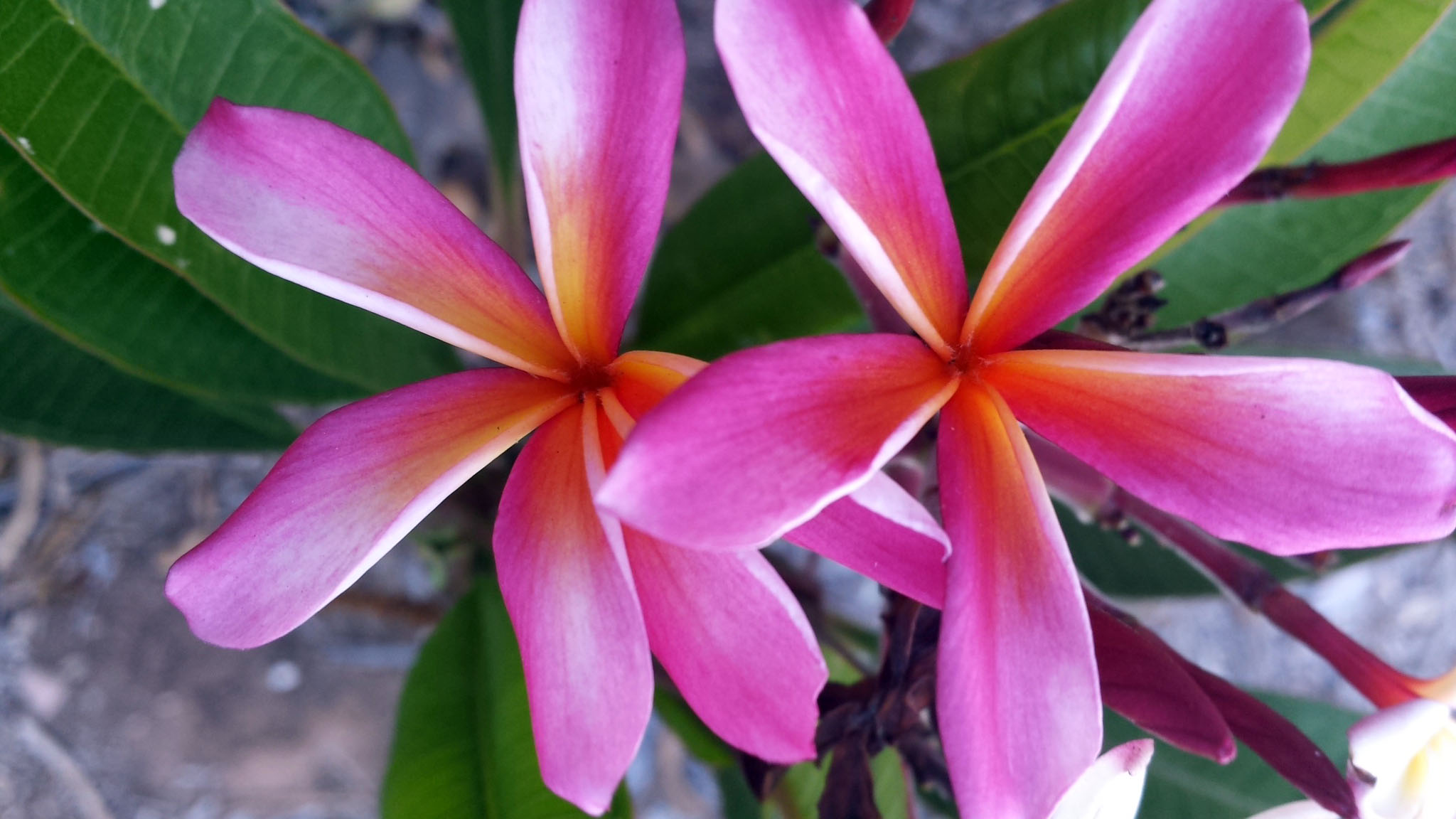
A clear photograph can reveal useful plumeria traits. It can help document flower color, petal form, leaf shape, growth habit, visible damage, and the condition of a plant at a particular moment. But even a beautiful photograph is only part of the evidence.
Good photo guidance begins by separating what the image actually shows from what the viewer hopes it will prove.
What a photograph may help you compare
- Flower front: center color, throat, primary and secondary colors, pattern, petal shape, overlap, and edge.
- Flower side or reverse: tube color, reverse color, petal curl, reflex, twist, and apparent thickness.
- Leaves: shape, tip, base, margin, vein visibility, surface, gloss, petiole, and variegation.
- Flower cluster: bud color, cluster shape, stalk, and the way blooms are presented.
- Whole plant: branching, canopy, compactness, vigor, and the location of visible stress.
What one photograph cannot establish
A photograph cannot prove fragrance, flower size without a scale, bloom frequency, growth performance over time, parentage, source history, or exact cultivar identity. Color may also change with sunlight, temperature, bloom age, camera settings, editing, and the screen on which it is viewed.
Visual matching should therefore produce possible comparisons, not a declaration of certainty. A responsible cultivar comparison uses several typical flowers, leaves, the whole plant, source notes, known history, and trusted reference photographs. If those clues conflict, the identity should remain reviewable.
Build a more useful photo set
Start with one front-facing open flower in even light. Add the reverse and side, a complete mature leaf with its petiole, the whole inflorescence, and the entire plant from soil line to canopy. When the question involves health, include the affected tissue and enough healthy tissue for comparison.
Record the date, region, recent weather, time of day, sun exposure, and whether the bloom is newly opened or aging. Preserve photographer credit and permission. These details help explain why the same plant may look different across photographs.
For the complete photography sequence and trait-by-trait examples, use the Plumeria Photo & Trait Matching Guide.
Choose your next step
- To compare names, traits, histories, and reviewed records, open the Plumeria Database Cultivar Center.
- To begin with a particular flower or plant photograph, continue with Ask Plu.Me.
Source path: This original Plumeria Care introduction points to reference guidance maintained by Plumeria Database.