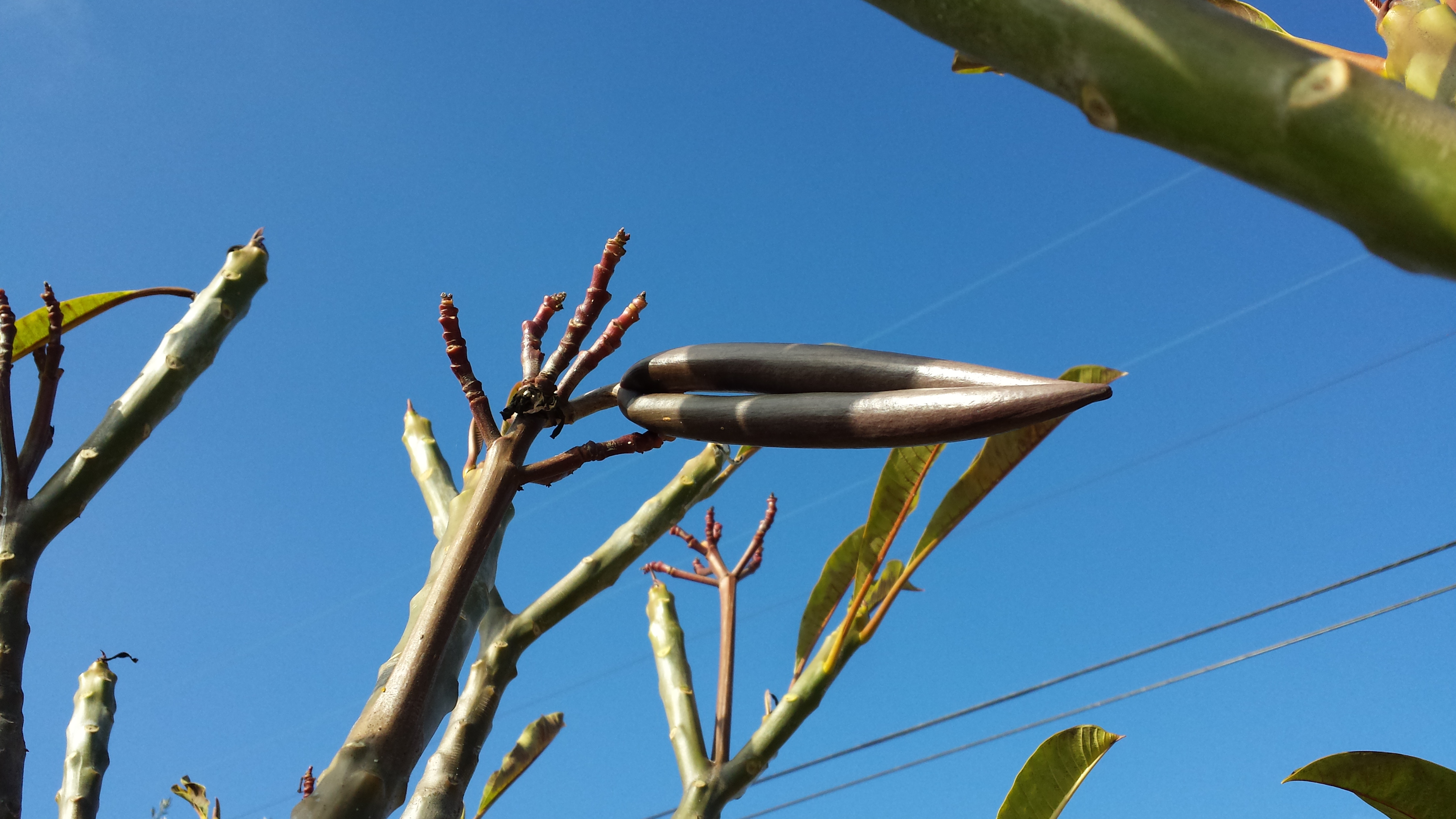
A dormant plumeria, a dehydrated plumeria, and a plumeria beginning to rot can all look inactive. Leaves may be gone, stems may wrinkle, and growth may stop. Those similarities make it tempting to water immediately or start cutting. The safer first step is to read the entire pattern.
The stem is useful evidence, but it should be interpreted together with season, temperature, root-zone moisture, and recent care.
Start with the plant’s current season
Leaf loss and slower water use can be normal when nights cool and daylight shortens. A firm, stable plant entering dormancy usually needs less intervention, not more. A plant kept warm under strong light may remain partly active, so its behavior should not be judged by the calendar alone.
Read firmness, location, and progression
- Firm but lightly wrinkled: may reflect reduced stored moisture, especially during a long dry rest.
- Softness at the base or below the soil line: deserves prompt root-zone inspection because cool, wet media can damage inactive roots.
- A soft area that is spreading: is more concerning than a stable surface mark or an old healed wound.
- Dark tissue with odor, collapse, or instability: should not be treated as ordinary dormancy.
Check below before adding water
A dry-looking surface does not prove that the lower root zone is dry. Check deeper moisture, drainage, pot weight, and whether the trunk is stable in the container. If the mix remains wet while the plant is inactive, more water may increase the problem. If the root zone is truly dry and the stem remains firm, note the plant’s temperature and activity before deciding whether a small correction is justified.
Make the smallest justified move
Do not water, fertilize, repot, and cut at the same time. Confirm the strongest evidence, change one condition, and watch whether the boundary stays stable or continues to spread. Photographs taken several days apart are often more informative than one isolated picture.
For the complete seasonal process, read Adjusting for Dormancy on Plumeria Care Guide.
Have a specific stem to assess?
Photograph the whole plant, the stem from tip to soil line, any changed area, and the potting mix. Include recent temperatures, watering history, and whether the plant is actively growing when you ask Ask Plu.Me. A photo can support a cautious comparison, but hidden roots and internal tissue may still require direct inspection.
Source path: This original Plumeria Care introduction routes detailed dormancy and seasonal-care guidance to Plumeria Care Guide.