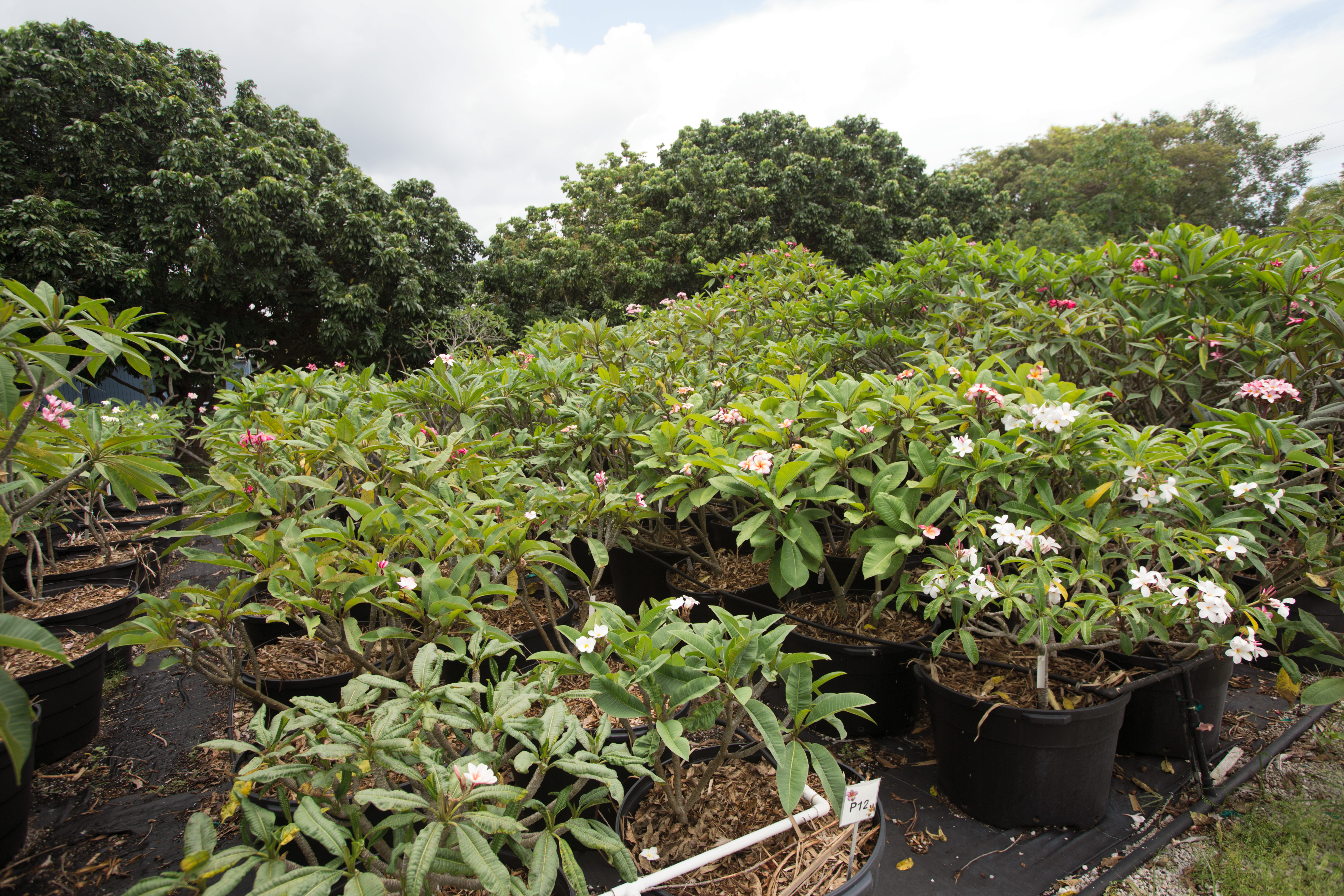
“How often should I water my plumeria?” sounds like a question that should have a simple answer. But the safest answer is not a number of days. A plumeria uses water according to its roots, soil, container, weather, growth stage, and season. The same plant may dry quickly during warm active growth and remain moist much longer when nights cool or growth slows.
A calendar can remind you to check the plant. It should not make the watering decision for you.
Five signals to check before watering
1. Root and plant stage
An established plant in active growth can normally use more water than an unrooted cutting, a newly rooted plant, or a plant recovering from root disturbance. If the roots are limited or uncertain, the amount of foliage above the soil does not always tell you how much water the plant can safely use.
2. Moisture below the surface
The top of a pot can look dry while the lower root zone remains wet. Check deeper with a wooden skewer, moisture probe, pot weight, or a careful finger test where practical. The goal is to understand the moisture around the working roots, not just the appearance of the surface.
3. Recent weather
Heat, wind, strong sun, and low humidity can speed drying. Rain, cool nights, shade, and high humidity can slow it. A schedule that worked during one week may be wrong after the weather changes.
4. Container, soil, and drainage
A small pot with an airy mix may dry rapidly. A large pot or heavy mix can hold moisture long after the plant has used what it can. Open drainage holes and oxygen around the roots matter as much as the amount of water added.
5. Active growth or seasonal slowdown
New leaves, warm roots, and active growth usually increase water use. Dormancy or a seasonal slowdown can reduce it sharply. A plant should not receive a summer watering routine simply because the calendar still says it is warm somewhere else.
Make one careful decision at a time
If the plant looks stressed, do not automatically add water, fertilizer, and new soil all at once. Check the root zone and drainage first, note the recent conditions, and change the strongest limiting factor. Then watch the next dry-down cycle. A small record of dates, weather, and pot moisture can reveal more than a fixed schedule ever will.
For the complete step-by-step decision process, read the Plumeria Watering & Moisture Guide.
Choose your next step
- Have a particular plant in front of you? Describe what you see or share a photograph with Ask Plu.Me.
- Want to understand which kind of decision the plant is ready for? Use Find My Phase on PlumeriaWay.
Source path: This original Plumeria Care introduction points to detailed guidance maintained by Plumeria Care Guide.